

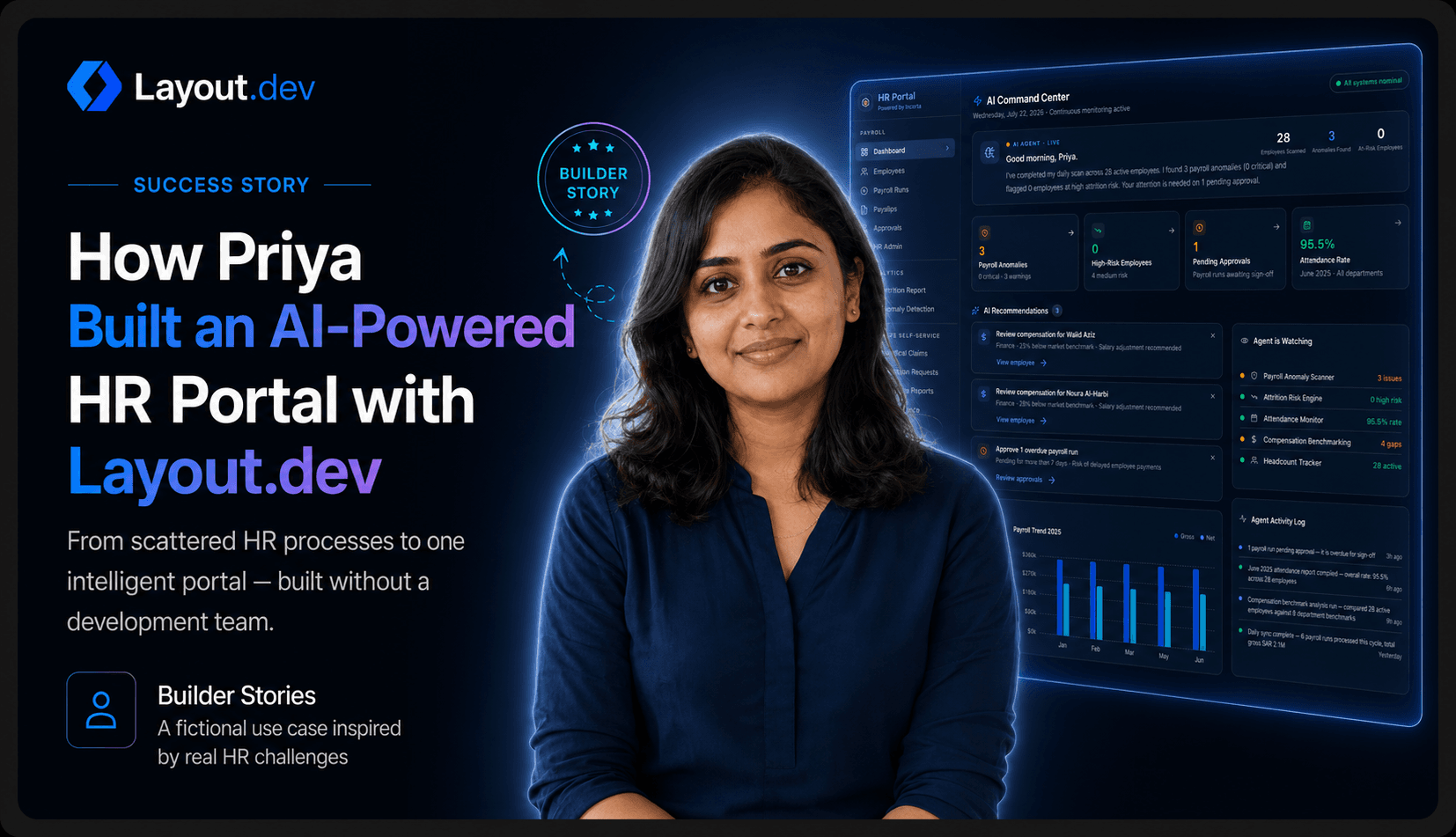
Meet Priya

Priya has always believed that good HR should feel human.
She entered People Operations because she wanted to support employees, strengthen company culture, and make the workplace better for the people inside it.
But as her company grew, her role began to change.
More of her day was spent checking payroll records, searching for employee information, following up on approvals, and responding to repetitive requests.
The work was increasing.
Her time wasn’t.
“I wanted to spend more time supporting our employees, but most of my day was disappearing into administrative work.”
The Challenge
When the company was smaller, Priya could manage most HR processes manually.
Employee information lived in spreadsheets. Vacation requests arrived through email and messages. Payslips were stored in separate folders. Payroll approvals depended on someone remembering to follow up.
As the team grew, that system became increasingly difficult to manage.
Priya faced several recurring challenges:
- Employee data was spread across different tools
- Payroll checks required too much manual review
- Approvals could easily become delayed
- Employees depended on HR for basic information
- Attendance and attrition patterns were difficult to spot early
- Important HR decisions were being made without a complete view of the data
- No out-of-the-box products provided the same experience she wanted to provide for her employees, in addition to the huge pricing bills.
Priya knew the company needed more than another spreadsheet.
It needed one central system connecting HR operations, employee services, and workforce insights.
A Clear Vision, but No Development Team
Priya began outlining what the ideal HR portal would include.
She imagined a single platform where her team could:
- Manage employee records
- Review and approve payroll runs
- Generate and organize payslips
- Handle medical claims and expense reports
- Process vacation requests
- Monitor attendance
- Identify payroll anomalies
- Understand potential employee attrition risks
She also wanted the platform to actively guide the HR team—not simply store information.
The problem was that Priya wasn’t a developer.
Building a system this complete would normally require technical planning, design resources, engineering support, and months of development.
“I knew exactly what the HR team needed. I just didn’t know how to turn that idea into a working product.”
Discovering Layout.dev
Priya discovered Layout.dev while researching ways to create internal tools without depending on a traditional development process.
Instead of starting with code, she started by describing her idea.
She explained the company’s HR workflows, the different sections the portal needed, and how employees and administrators should interact with it.
Then, she began building.
“What surprised me was how quickly my idea started looking like a real system—not just a basic mockup.”
Building the Foundation
Priya began with the areas creating the most pressure for her team: employee records, payroll runs, payslips, and approvals.
She wanted administrators to move between these workflows without searching through multiple files or applications.
Using Layout.dev, she created a structured HR workspace with dedicated areas for:
- Employees
- Payroll runs
- Payslips
- Approvals
- HR administration
Every part of the portal had a clear purpose.
Instead of trying to build everything at once, Priya focused on one workflow at a time. She reviewed each screen, refined the experience, and continued adding the features her team needed.
“I didn’t need to understand every technical step. I could focus on explaining how the system should work.”
Making HR More Accessible for Employees
Priya didn’t want the portal to benefit only the HR department.
She wanted employees to have more control over their own information and requests.
She added a self-service section where employees could manage:
- Medical claims
- Vacation requests
- Expense reports
- Attendance information
This reduced the number of repetitive questions sent to HR and gave employees a clearer, more consistent experience.
Instead of waiting for someone from HR to locate an update, employees could access the information and services they needed from one place.
For Priya, that was an important part of the project.
“The goal wasn’t only to make HR faster. It was to make the experience easier for everyone.”
Adding Intelligence to the Portal
Once the core workflows were in place, Priya began exploring how AI could help her team become more proactive.
She created an AI Command Center capable of continuously monitoring workforce activity and bringing important issues to the team’s attention.
The dashboard could surface:
- Payroll anomalies
- Pending approvals
- Attendance trends
- Compensation gaps
- Potential attrition risks
- Recommended actions for HR administrators
Instead of manually reviewing every record, Priya could immediately see where her attention was needed.
The system didn’t replace her judgment.
It gave her better information to act on.
The HR Portal in Action
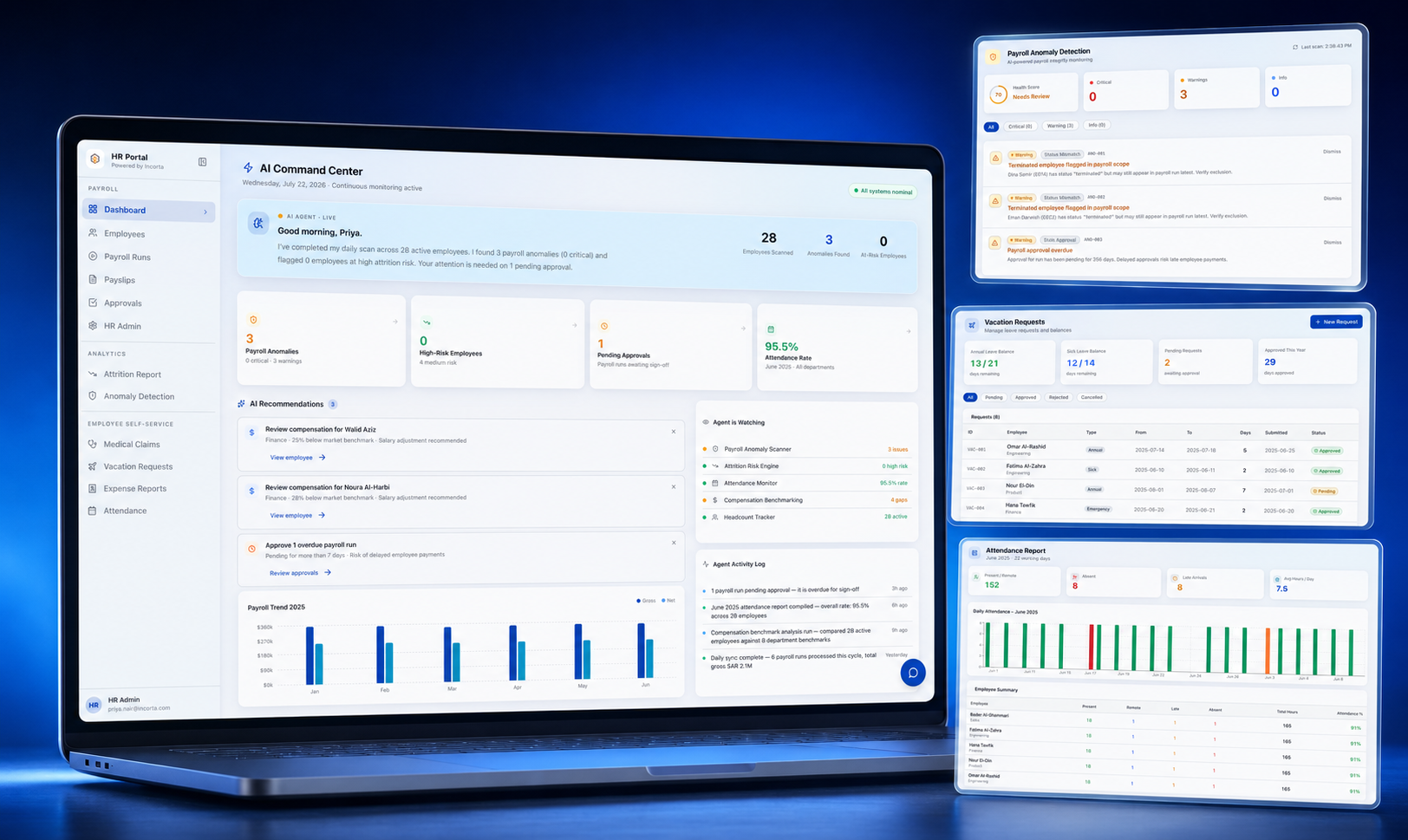
The main dashboard gives Priya a complete view of HR activity across the company.
At a glance, she can see how many employees were scanned, whether payroll anomalies were detected, which approvals are waiting, and whether any employees show signs of increased attrition risk.
AI-generated recommendations help her prioritize the most important actions.
The anomaly detection experience helps the HR team identify unusual payroll activity without reviewing every entry manually.
Potential issues can be investigated before they affect employees or create larger operational problems.
Payroll records and payslips are organized within the same system, giving administrators a clearer process and reducing the need to move between disconnected tools.
The employee self-service experience gives employees a straightforward way to submit and monitor their own requests.
Building Through Iteration
The HR portal didn’t appear from one perfect prompt.
Priya built it through patience, experimentation, and continuous improvement.
Some screens needed more detail. Certain workflows had to be reorganized. New ideas emerged as she interacted with the portal and imagined how her team would use it each day.
She continued refining her prompts until the product reflected her original vision.
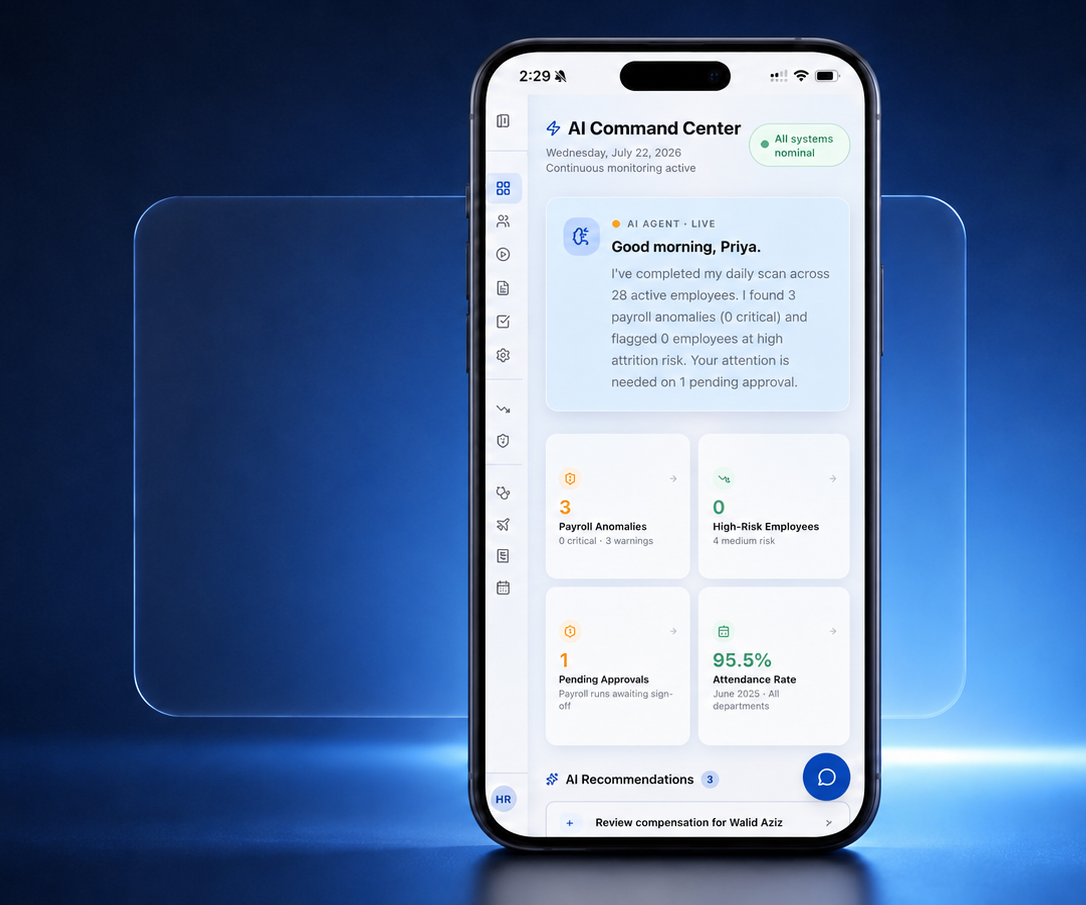
Priya also refined the portal for mobile, making essential HR insights accessible wherever her team works.
That process became one of the most empowering parts of the experience.
“Every time I improved an instruction, the portal became closer to the system I had pictured in my head.”
She wasn’t simply selecting features from a template.
She was shaping the product around the real needs of her team.
Why Layout.dev Stood Out
For Priya, Layout.dev stood out in four important ways.
Turning Business Knowledge into a Product
Priya already understood the HR problem.
Layout.dev helped her transform that knowledge into a working application without requiring her to become a developer first.
Rich, Complete Outputs
The portal wasn’t limited to a simple dashboard or interface shell.
It included detailed workflows, employee services, operational tools, analytics, and AI-driven recommendations.
Faster Iteration
Priya could test an idea, review the result, and refine it immediately.
She didn’t have to wait for every change to move through a lengthy development cycle.
Control Over the Experience
Because she could build and iterate directly, Priya stayed closely involved in every decision.
The final product reflected how her HR team actually worked—not how someone outside the department assumed it worked.
The Result
Using Layout.dev, Priya transformed an idea into a complete HR portal connecting payroll, employee management, approvals, analytics, and self-service workflows.
What began as an attempt to reduce administrative pressure became something bigger.
It gave the HR team one place to manage its work.
It gave employees easier access to essential services.
And it gave Priya more time to focus on the people behind the processes.
She didn’t wait until she had a development team, a large budget, or perfect technical knowledge.
She started with the problem she understood—and kept building.
“I used to think creating a system like this was outside my role. Layout helped me realize that understanding the problem was enough to begin.”
More Time for the Work That Matters
Priya’s story isn’t about replacing people with AI.
It’s about giving people better tools.
By reducing repetitive work and bringing critical information into one place, the portal allows Priya to spend less time chasing files and more time helping employees succeed.
Her knowledge of HR shaped the idea.
Her dedication shaped the experience.
Layout.dev helped her bring it to life.
Your Idea Could Be Next
Priya didn’t begin with code.
She began with a problem worth solving.
One idea.
One prompt.
One workflow at a time.
That’s the power of Layout.dev.
From prompt to product.